
Students are growing up in an ever-changing world where many children carry invisible baggage with them each day. Family stress, social media, world events, or community challenges can all impact how they show up to learn, and when emotions take over, learning takes a back seat. Supporting students in regulating their behaviors and emotions teaches skills they can use for life. By intentionally integrating emotional regulation into our classroom routines, we can create calmer, more connected spaces where all students feel safe, supported, and ready to learn. I am here to help teachers create a classroom environment where students feel safe, supported, and able to manage the big feelings that get in the way of learning. In this blog post, I’ll share evidence-informed strategies, classroom tips, and outside resources you can use right away to help students regulate their behavior and emotions more effectively.
What is Emotional Regulation?
Emotional regulation is the ability to have control over one’s emotional state (Psychology Today). Cornell University defines emotional regulation as the person’s ability to manage and respond to emotional experiences effectively. People use emotion regulation strategies to cope with difficult situations. Effective emotional regulation has been linked to a sense of school connectedness, including feelings of being accepted by others, respected included and supported by others in the school (NLM). Greater Good in Education shares that children who have difficulty regulating emotion also have trouble learning in the classroom and are less productive when completing assignments. If we want students to be successful in the classroom and later in life, teachers need to teach students effective strategies for regulating their emotions. The ability to manage behavior and emotions in accordance with the demands of a situation, being able to resist highly emotional reactions to upsetting stimuli and calm down when upset, adjust to change, and handle frustration without an outburst are all parts of emotional regulation( Child Mind Institute).
Why Emotional Regulation Matters in the Classroom
In the classroom, students with emotional regulation difficulties may interfere with student engagement and social relations with peers or teachers (NLM). Teaching students emotional regulation strategies is essential for meaningful learning to take place. Students who struggle to identify, manage, or modulate emotions are more likely to disengage or display disruptive behaviors. Emotions and cognition are intertwined: when students are dysregulated, their “thinking brain” is often hijacked by fight/flight impulses. Helping them find calm through regulation helps them re-access reasoning, problem-solving, and impulse control. It is crucial for students to learn to regulate their emotions and build positive supports and coping strategies in order to learn effectively. Emotional regulation is for everyone!
Implementing Emotional Regulation in the Classroom
Teach foundational skills
The first step to implementing emotional regulation in the classroom is to help students identify emotions and connect emotions and behavior. My Emotions SEL Unit is a great resource for teaching these foundational skills. Students need to learn to identify and label emotions to regulate them. Teachers can start by teaching vocabulary and emotional awareness. Use language about emotions and behaviors that help students identify what they are feeling and how they are reacting to stimuli. Discuss emotional responses from characters in stories. Have students share what they are feeling in different situations. Incorporating vocabulary and language about emotions and emotional regulation supports the dialogue for emotional regulation.
Use Visuals
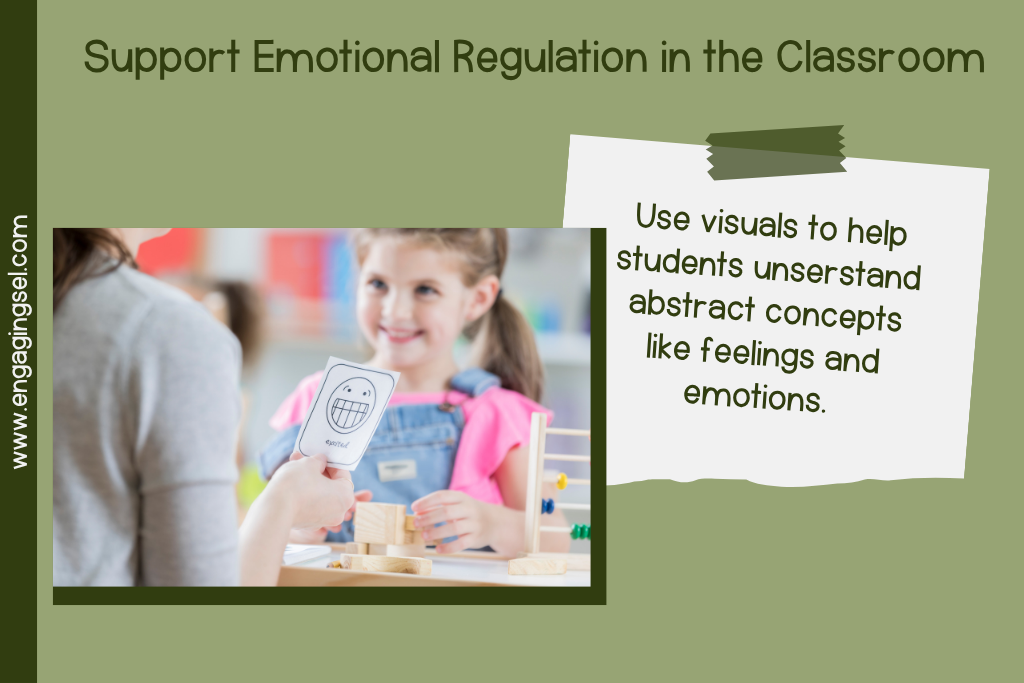
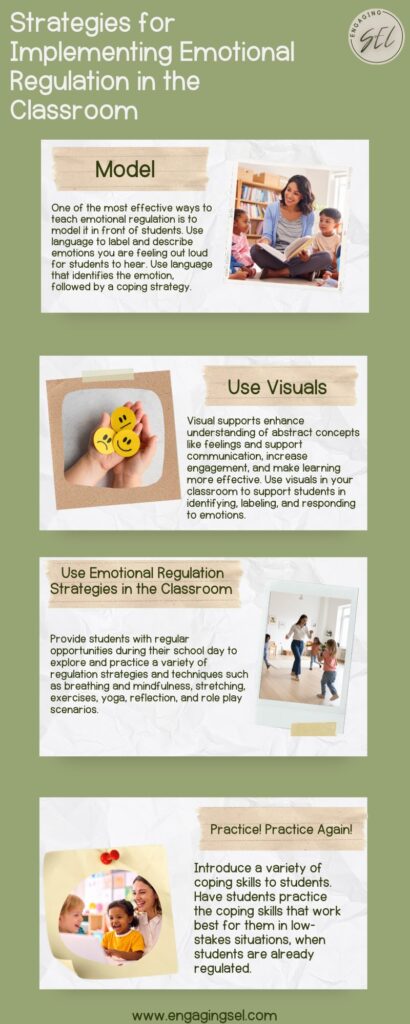
ASAT shares that visual supports enhance understanding of abstract concepts like feelings and also support communication, increase engagement, and make learning more effective. There are so many options to include in your classroom to support students in identifying, labeling, and responding to emotions. Emotion charts with the picture of students demonstrating emotions are helpful for students who need support in identifying what emotions they are feeling. Anchor charts with different coping strategies are effective when students need reminders of effective strategies they can use. Visual cue cards can help students choose a regulation strategy when needed. Mentor texts or read-alouds help students anchor their understanding with something concrete. Check out my mentor text recommendation list for books about emotional regulation and emotional intelligence.
Model
One of the most effective ways to teach emotional regulation is to model it in front of students. Use language to label and describe emotions you are feeling out loud for students to hear. Use language that identifies the emotion, followed by a coping strategy. For example, “ I am frustrated I cannot get the smartboard to work. I am going to take a one-minute calm-down break and come back when I feel better” or “ I am frustrated and I need to take a few deep breaths to calm down before I start again”. When students see us modeling these behaviors, it supports their understanding and gives them a better chance at effectively using these strategies. You can also label and identify student behaviors. Identify what you see the child doing, body language and posture, and identify the possible emotions they might be feeling. For example, you can say, “ I see your shoulders are raised and your fists are clenched. It looks like you might be feeling angry. The more we are able to label and identify our emotions in front of students or help them identify their own, the more likely they will be able to do it on their own, independently.
Integrate Regulation Strategies into the School Day
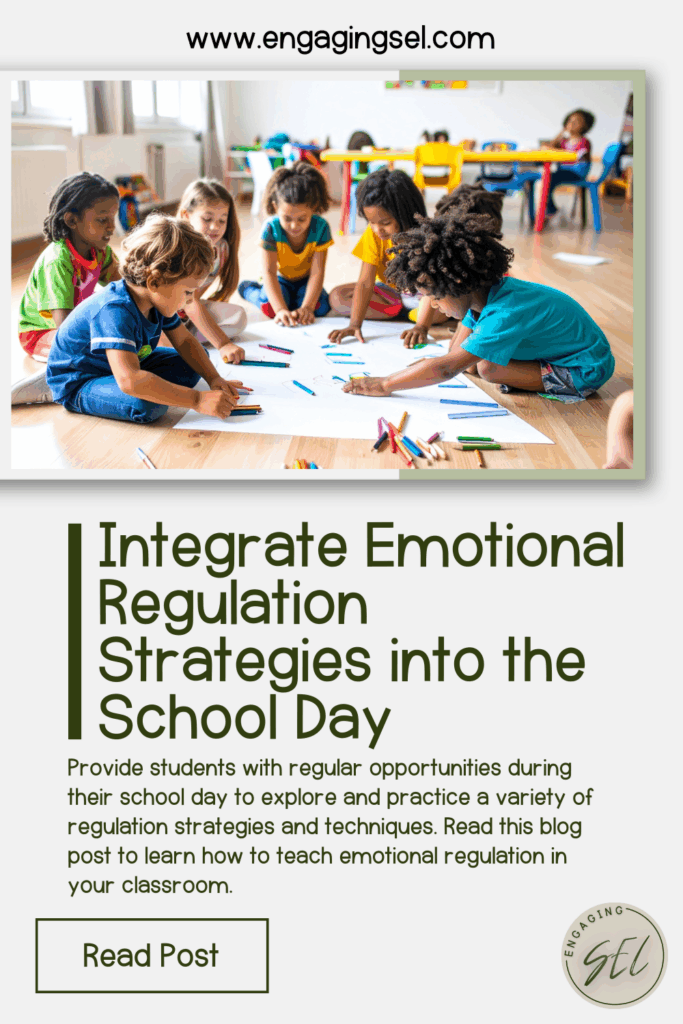
Provide students with regular opportunities during their school day to explore and practice regulation strategies and techniques. These strategies are best taught when students are calm and able to process the information. Teach students the strategy before they need it and practice it so they can use it effectively. Some regulation strategies that are easily incorporated into a busy classroom day are:
- Breathing & Mindfulness
Simple practices like deep belly breaths, “five-finger breathing,” body scans, counting slowly, or guided imagery can help calm the nervous system. - Movement & Sensory Breaks
Provide short movement breaks (stretching, walking, wall push-ups), exercises, or a yoga - Reflection & Journaling
Give students time to write or reflect on their emotions: what triggered them, how they responded, and what they might try next time. GGIE - Scaffolded Practice / Role Play
Role-play common triggering scenarios (group work conflict, test anxiety) when students are calm so the strategies become more automatic under stress. - Calm Area
- Provide students with a calm area in the classroom where they are able to safely regulate their emotions. My Calm Area resources are linked here.
Positive Classroom Environment
Creating a positive classroom environment where students feel comfortable exploring their emotions and regulation strategies supports emotional regulation. Students need to feel comfortable and know they are in a safe space when practicing emotional regulation skills. Build routines and procedures so students know what to expect, which builds consistency and reduces anxiety. Cultivate a positive classroom environment and encourage positive relationships among students through team-building and activities. (3rd Millennium Classrooms). Create a culture of respect and understanding so students feel comfortable in their space. Read more about creating safe, inclusive spaces here.
Practice, Practice, Practice!
Students will be able to make good choices and choose positive coping strategies in difficult times through scaffolding and consistency ( Child Mind Institute). Introduce a variety of coping skills to students. Have students practice the coping skills that work best for them in low-stakes situations, when students are already regulated. Give students possible scenarios to work through, and have them identify the emotion, and give a coping skill the student in the scenario could use. Have students practice different coping skills with a partner and throughout the day. The more students are able to practice their coping and emotional regulation skills, the more likely they are to apply them when they are emotionally dysregulated.
Conclusion
Emotional Regulation is not something that is going to happen overnight. It takes exposure to coping and regulation strategies, practice, and feedback over a period of time to be able to use these strategies effectively. Emotional regulation is a skill that can be taught with patience, time, and consistency. Once students learn these skills, they will be able to use them for the rest of their lives. As teachers, we can’t eliminate all difficult feelings, but we can teach students how to navigate them, scaffold their regulation, and co-regulate when needed. Over time, you’ll likely see fewer disruptions, more student ownership of behavior, and a more emotionally resilient classroom culture.