
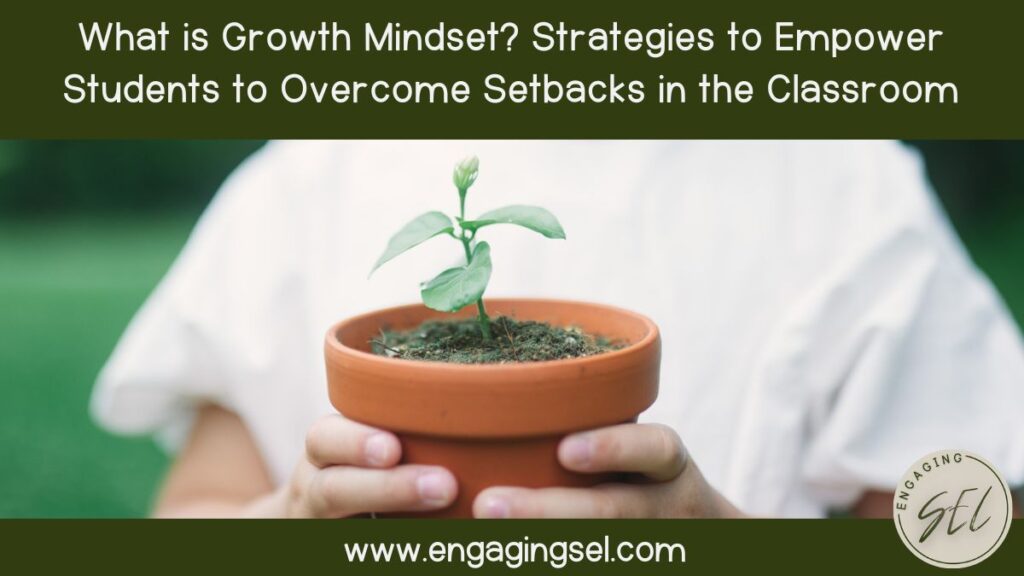
Elementary classrooms are full of challenges for young learners. Students may have big feelings and emotions when they encounter a setback in their learning. Teachers can help students overcome those challenges and persevere through obstacles by introducing the growth mindset approach in their classrooms. This blog post will explore what a growth mindset is, how it can help students, and strategies to help teachers implement a growth mindset approach in the classroom.
What is A Growth Mindset?
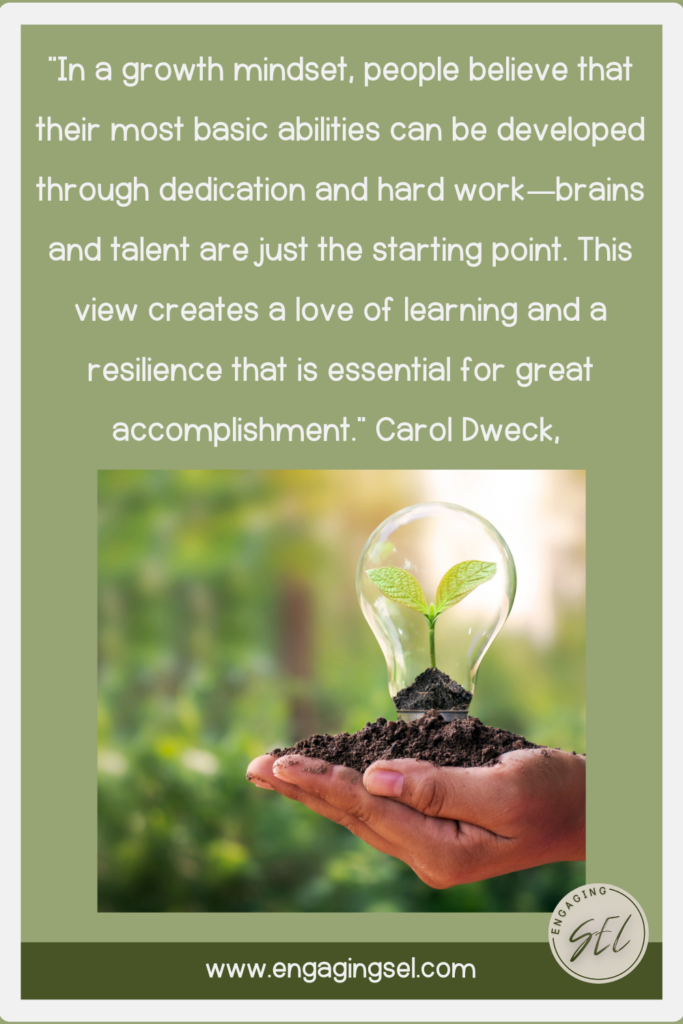
The term Growth Mindset was coined by Carol Dweck in her book Mindset: The New Psychology of Success. “In a growth mindset, people believe that their most basic abilities can be developed through dedication and hard work—brains and talent are just the starting point. This view creates a love of learning and a resilience that is essential for great accomplishment.” (Dweck, 2015) . She shared that a growth mindset is the belief that abilities and intelligence can be developed through dedication, hard work, and encouragement. A fixed mindset, however, is the belief that intelligence and talents are innate and unchangeable. People with the growth mindset tend to embrace challenges, believe that effort leads to mastery, and setbacks are an opportunity to learn and grow.
Why is Growth Mindset Important in the Classroom?
Students’ beliefs in their own ability shape their approach to learning and education and affect their performance. Students are more likely to increase their effort and abilities when they understand they have power over their academic performance. Accelerate Learning shares: “It’s about helping students see challenges as stepping stones to mastery and understanding that effort is a key part of the journey to success.” (AccelerateLearning)
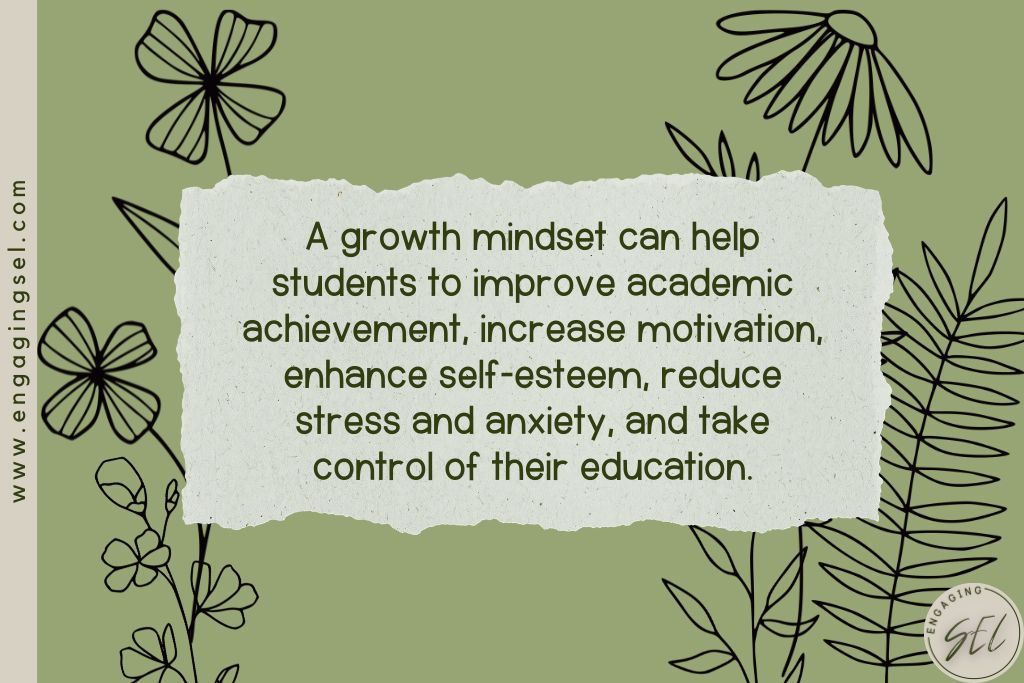
A growth mindset can help students to improve academic achievement, increase motivation, enhance self-esteem, reduce stress and anxiety, and take control of their education. When students hold the belief that their academic abilities can be developed, they develop resilience and the ability to persevere in challenges. (Dr. Annise Maybry Foundation)
Strategies to Foster Growth Mindset in the Classroom
So now you know what a growth mindset is and why it is important for students to learn, but what are you going to do next? Here are some simple strategies to help you implement a growth mindset in your classroom today.
Praise the Process, Not the Outcome
Get students focused on the learning process instead of the final outcome. Notice and comment on the effort, strategies used, and improvements made, instead of just on the final outcome. This will get students to realize the progress they are making towards the end goal, instead of just the end result. For example:
- “You didn’t give up, even when it was tricky.”
- “You kept practicing, and look how much you’ve grown.”
This helps students connect success to actions rather than ability. This allows students to notice they are making gains, even if they are not to the end of the challenge.
Power of Yet
Teaching students the power of yet shows them that while they might not be able to do something right now, with practice, determination, and effort, they will be able to do it in the future. Goals are something that will not happen right away, but are something to be working towards. My favorite example to use when teaching this concept is when babies learn to walk. No baby just gets up and starts walking right away. They start by standing, then taking a few steps, and falling. Then they get up and try again, taking more steps until they can keep taking steps without falling. That is the power of yet! You might not be able to do it yet, but keep practicing, and it will happen.
Model Growth Mindset
Everyone makes mistakes, and the beauty of mistakes is that they help us learn. Some students think that adults never make mistakes, so destroy that illusion by making mistakes in front of your students. Demonstrate for students how you learn from mistakes. When you make a mistake (accidental or on purpose), narrate for your students what happened and how that is helping you learn. Use language that reflects the growth mindset principles. Students listen closely to how adults talk about learning. Use language that emphasizes effort, strategies, and growth.
Instead of:
- “You’re so smart!”
Try:
- “You worked really hard on that.”
- “I can see you tried a new strategy.”
When teachers model growth mindset language, students begin to mirror it.
Emphasize the fact that this mistake will help you do better in the future. Students will start to internalize the language that you use in their own lives.

Encourage Self-Reflections
Encourage students to think about what they did well and how they can improve next time. When thinking about mistakes, help them realize that what they did wrong helps them know what to do differently the next time. Supporting students in thinking about the learning process is just as important as the actual learning process. Helping students reflect on their effort and improvement is crucial to the growth mindset.
Normalize Challenges and Setbacks
Teach failure as an important part of the learning process. Failure is not something to be upset about; it is an essential part of success. No one is able to succeed without failure first. Share stories about famous musicians, actors, inventors, and athletes who had failures early in their careers. Highlight the importance of failure and how these people overcame their setbacks and grew from their mistakes. Share personal examples from times you failed at something and learned from your mistakes.
Teach Formal Lessons
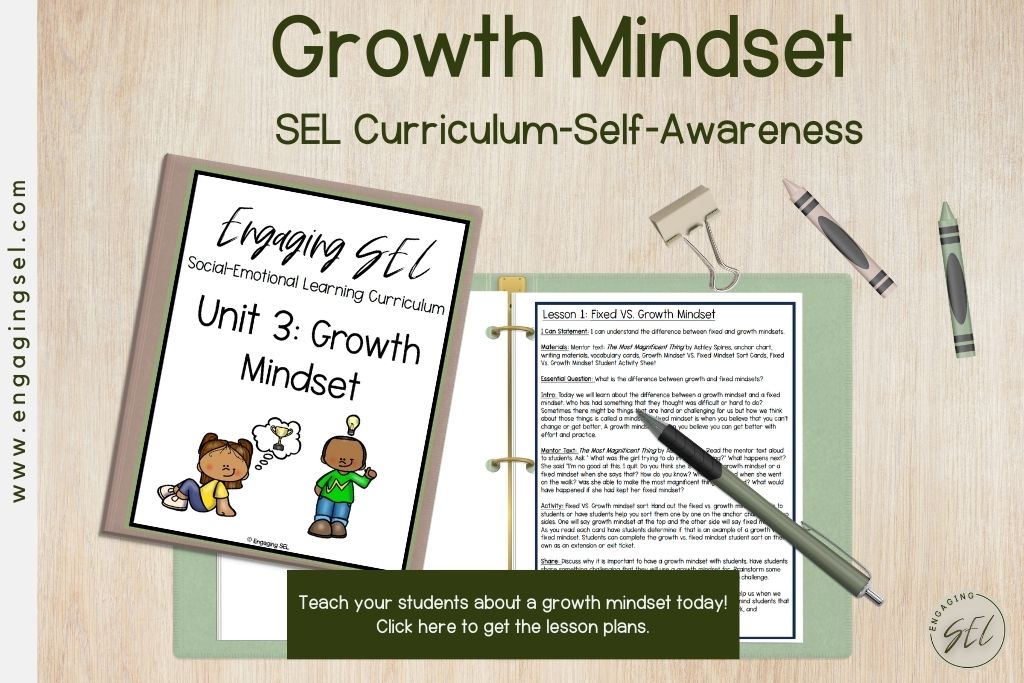
A growth mindset is best learned through explicit lessons that teach students about what exactly is going on in their brains and what they can do to control it. Use formal, explicit lessons dedicated to teaching students what a growth mindset is, how it can help them,m and what they can do to use a growth mindset in the classroom. My Growth Mindset unit from my Engaging SEL Curriculum is a great place to start teaching students about the growth mindset. This unit has lessons on the power of yet, brain elasticity, embracing challenges, and so much more. I hope it helps you start teaching your students about the power of using a growth mindset.
When students believe they can overcome challenges, they carry that confidence into every area of life. Growth mindset teaches children that learning doesn’t stop when something feels hard—it starts there. By intentionally fostering a growth mindset in your classroom, you’re not just teaching academic skills. You’re empowering students with the tools to persevere, problem-solve, and believe in themselves—no matter the challenge.